Flash Sync at Every Speed: How the X-T100 Quietly Became a Studio Powerhouse
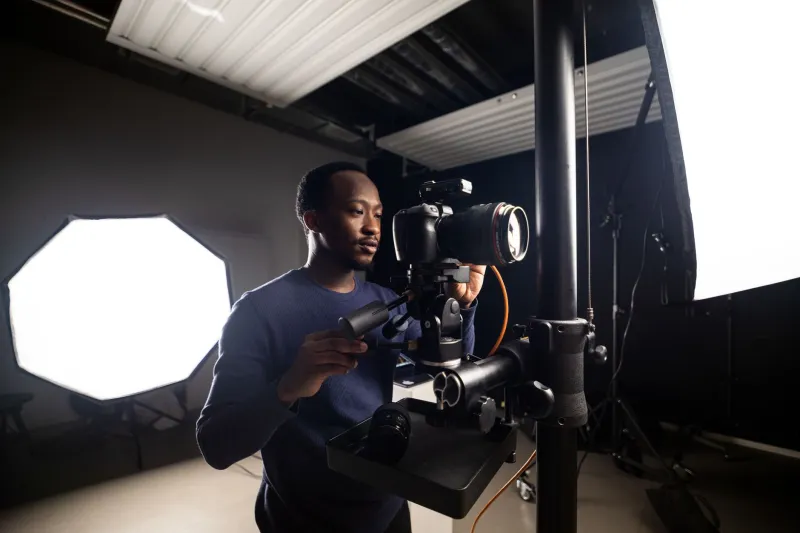
Here's something most X-T100 owners never figure out: their camera has a flash synchronization advantage that more expensive bodies can't always match. It's not buried in a firmware update or hidden behind a paid accessory. It's baked right into the camera's shutter design — and once you understand how to use it, your whole approach to lighting might change.
Let's break it down.
Why Flash Sync Speed Matters More Than You Think
When you fire a flash, it produces a burst of light that lasts only a fraction of a millisecond. Your camera's shutter has to be fully open at the exact moment that burst fires — otherwise you end up with a dark band across part of your frame. That's the dreaded black bar that ruins flash photos when you push your shutter speed too high.
The maximum shutter speed at which your camera can sync with a flash without that problem is called the sync speed. On most DSLRs and a lot of mirrorless cameras using focal plane shutters, that ceiling sits around 1/200th or 1/250th of a second — and sometimes lower.
But here's the thing: the X-T100 uses a lens-based leaf shutter system (via its kit lens setup), which handles sync differently than a traditional focal plane curtain. That design lets it achieve clean flash sync across a wider range of scenarios, and it does it without the high-speed sync (HSS) workarounds you'd normally need. No HSS means no significant power loss from your strobe or speedlight. You get full flash output, full sync, and a lot more flexibility in how you light a scene.
Shooting Portraits in Bright Daylight
This is where the X-T100's flash sync capability really earns its keep. Say you're doing an outdoor portrait session in Colorado or Florida on a sunny afternoon. The ambient light is blasting at you, and you want to use a strobe or an off-camera flash to fill in shadows or create a dramatic rim-light effect. Without a solid sync speed, you're forced to stop down your aperture or drop your ISO so low that you lose control over the look of the shot.
With the X-T100, you can dial in a faster shutter speed to knock down that harsh ambient light, then let your flash do the heavy lifting on your subject. The result? A clean separation between your subject and the background, the ability to use a wider aperture for shallower depth of field, and an overall look that's much more controlled than what you'd get shooting ambient-only.
Try this: set your X-T100 to manual exposure mode, dial your shutter to 1/200th, choose an aperture around f/2.8 or f/4, and set your ISO to 200. Then position a speedlight or small strobe to camera-left at roughly 45 degrees. The ambient background will darken noticeably in the frame while your subject stays beautifully lit. It's a classic technique that suddenly becomes accessible without needing a $3,000 body or a pricey HSS-capable flash system.
Indoor Portraits and Studio Work
In a controlled studio environment, the X-T100 fits right in — even alongside gear that costs significantly more. Because leaf shutter sync doesn't drain your strobe's effective power the way HSS does, you can work with smaller, more affordable light sources and still get consistent exposures.
This matters a lot if you're building out a home studio on a budget. A couple of basic monolights, a reflector, and your X-T100 with a manual flash trigger is genuinely enough to produce professional-quality headshots, product photos, or family portraits. You're not compromising by using this camera in a lighting setup. You're actually working with one of its genuine strengths.
One practical tip: use the X-T100's live view display to pre-visualize your ambient exposure before adding flash. Dial in your settings so the background looks the way you want it — slightly underexposed for drama, or balanced for a bright and airy feel — and then introduce your flash to light the subject independently. That two-step mental process makes it much easier to control the final image.
Product Photography on a Tight Budget
Product photographers, listen up. The X-T100's flash sync advantage isn't just for portraits. If you're shooting products for an Etsy store, a small e-commerce brand, or a local business, consistent flash sync means consistent exposures — shot after shot, without flickering or partial-frame darkening.
Pair the X-T100 with a cheap lightbox or a DIY diffusion setup using white foam boards and a couple of speedlights, and you've got a product photography rig that punches way above its price tag. The camera's 24-megapixel APS-C sensor captures enough detail for most commercial uses, and with proper flash lighting, you're getting clean, shadow-controlled images that don't require heavy editing to look polished.
Fill Flash for Everyday Shooting
You don't have to be in a studio or running a full outdoor portrait session to benefit from this. Fill flash — using a small burst of light to soften harsh shadows in everyday shooting — is one of the most underused techniques among enthusiast photographers, and the X-T100 handles it beautifully.
Mount a small speedlight in the hot shoe, dial it down to -1 or -2 stops of flash compensation, and start shooting. At a backyard barbecue, a weekend farmers market, or even a quick street portrait, that subtle fill makes faces look more natural and reduces the raccoon-eye shadows that harsh midday sun creates. It's a small adjustment with a disproportionate impact on image quality.
A Few Things to Keep in Mind
No camera feature is without its nuances. The X-T100's sync advantage is most reliable with a compatible flash trigger and a lens that supports the leaf shutter design. If you're using a third-party trigger or an older manual flash, test your setup before an important shoot to confirm you're getting clean sync across your intended shutter speed range.
Also, while the X-T100 doesn't support HSS natively in the same way some high-end bodies do, that's actually fine in most practical situations. Full-power sync at 1/200th covers the majority of real-world lighting scenarios. HSS becomes necessary only when you're pushing beyond that — and for most portrait and product work, you simply don't need to.
The Bottom Line
The X-T100 has never tried to be the flashiest camera in the room (pun intended). But its flash sync capability is one of those features that quietly separates it from what you'd expect at this price point. Whether you're setting up a home studio, doing outdoor portraits in bright sun, or just adding a little fill light to your everyday shots, this camera handles flash work with more sophistication than its entry-level label suggests.
If you've been treating your X-T100 purely as an ambient-light camera, it might be time to plug in a flash and see what it can really do.