Mirrorless vs. Mobile: Knowing When Your X-T100 Wins (and When Your Phone Is Just Fine)
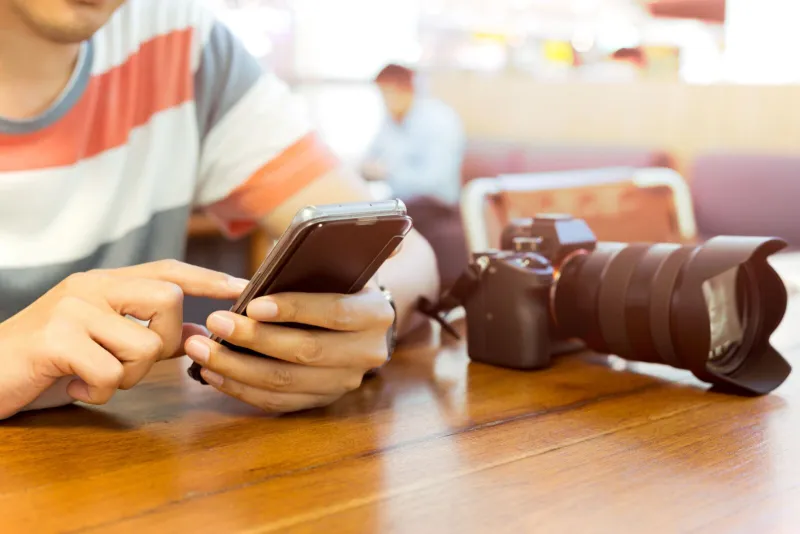
Photo: photographer holding mirrorless camera and smartphone side by side travel, via cdn1.matadornetwork.com
Here's a conversation that happens constantly in photography communities: someone posts a beautiful shot, someone else asks what camera they used, and the answer is a phone. Cue the existential hand-wringing about whether dedicated cameras are even worth it anymore.
Short answer: yes, but not always, and not for every reason you might think.
I've been shooting with both the X-T100 and a current-generation flagship smartphone for a while now, in a lot of different situations — weekend road trips through the Southwest, concerts, family gatherings, golden hour hikes in the Rockies. Here's what I've actually learned, stripped of gear tribalism.
Where the X-T100 Genuinely Wins
Low Light Without the Smearing
Modern smartphone cameras are impressive in low light. They've gotten legitimately good at it. But here's the thing: that impressive low-light performance is largely computational. Your phone is stacking multiple frames, applying aggressive noise reduction, and making decisions about what detail to keep and what to smooth over — all in the background, all without your input.
The result looks clean on a phone screen. Zoom in or print it at any real size, and you'll often see a watercolor effect on textures — skin, fabric, foliage — where the detail just... isn't there anymore. It's been averaged away.
The X-T100 shooting RAW at ISO 3200 gives you real photographic noise — grain you can actually work with in post. It's not "cleaner" in the way your phone looks clean, but it retains actual detail. For anyone who prints, crops aggressively, or just wants full control over the final image, that matters a lot.
Shallow Depth of Field That's Actually Real
Portrait mode on smartphones has come a long way, and for a clean headshot against a simple background, it can look convincing. But it's still a simulation — the camera is estimating where your subject ends and the background begins, and it makes mistakes. Hair, glasses, anything with a complex edge gets weird.
The X-T100 with a fast prime — say, a 35mm f/2 — produces genuine optical bokeh. The blur is real, the transitions are smooth, and nothing looks like it was cut out with scissors. If you shoot a lot of portraits or product photography, this is a meaningful difference.
The Shooting Experience Itself
This one doesn't show up in spec sheets, but it's real: there's a psychological difference between holding a dedicated camera and shooting with your phone. With the X-T100, you're in a photography mindset. You slow down, you compose more deliberately, you think about what you're actually trying to capture.
With a phone, photography competes with texts, notifications, social media apps, and the general chaos of a connected device. Some people can tune that out. A lot of people can't.
For travel photography especially, carrying a dedicated camera changes how you engage with a place. It's not just gear — it's a signal to yourself that you're here to pay attention.
Zoom That Doesn't Fall Apart
Optical zoom on smartphones is improving, but most phones still rely on digital zoom past their primary lens, and digital zoom is just cropping. The X-T100 with a kit lens gives you real optical reach without degradation. If you're shooting wildlife at a national park, sports from the bleachers, or anything where you genuinely can't get close, the gap is significant.
Where Your Phone Has Genuinely Caught Up
Casual Daylight Shooting
In good light, a modern flagship phone produces images that are very, very hard to distinguish from a mirrorless camera in casual use — scrolling through social media, sharing with family, posting to Instagram. If you're not printing large and you're not editing heavily, the difference is minimal.
For a quick shot at a backyard barbecue or a sunny afternoon at a farmers market, leaving the X-T100 at home is a completely reasonable call.
Speed and Convenience
The phone wins here, full stop. It's already in your pocket, it opens instantly, and it handles basic exposure decisions fast enough to catch a candid moment. The X-T100 is faster than a DSLR, but it still requires taking it out of a bag, powering up, and making a series of conscious decisions. That friction is worth it when you're being intentional. It's annoying when you're just trying to grab a quick shot of something funny your dog did.
Video for Casual Use
For social media video — Reels, TikTok, YouTube vlogs — smartphones have an enormous workflow advantage. The stabilization is excellent, the files go straight to your editing app, and you can upload without touching a computer. The X-T100's video quality is solid, but the workflow is comparatively clunky for casual content creators.
Wide-Angle Everything
Smartphones almost universally include an ultra-wide lens now, and it's genuinely useful — architecture, tight interiors, big landscape establishing shots. The X-T100's kit lens starts at 16mm (equivalent), which is reasonably wide, but it can't match the dramatic perspective of a phone's ultra-wide without additional glass.
The Honest Framework
So when should you bring the X-T100? Bring it when the light is challenging, when depth of field matters, when you're going to print or crop heavily, when you want to slow down and shoot deliberately, or when the experience of shooting is part of the point.
Leave it at home when convenience is the priority, when you're in bright daylight and don't need much control, when video workflow matters more than quality, or when a bag full of camera gear is just going to stress you out.
The X-T100 isn't competing with your phone for every photo you take. It's competing for the ones where the difference actually matters — and in those moments, it still wins convincingly.
Knowing which situation you're in before you leave the house is most of the battle.