Slow Down to Level Up: What the X-T100's Autofocus Pace Taught Me About Better Photography
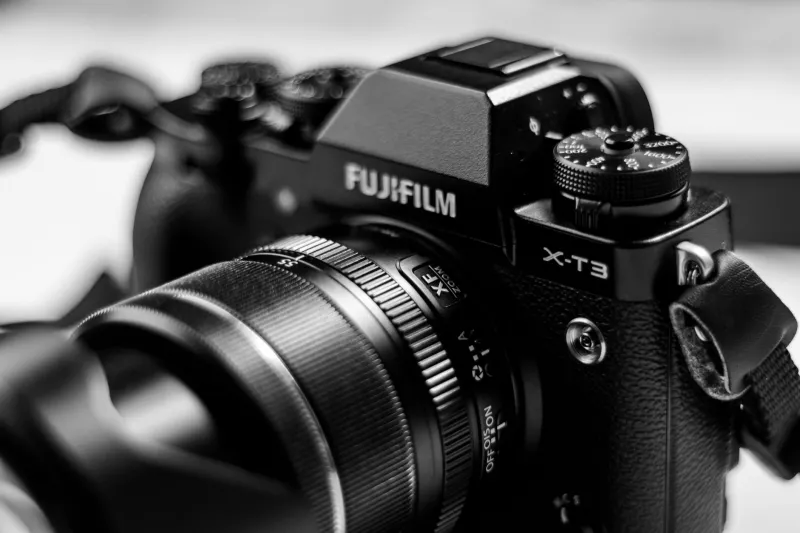
Let's be honest about something upfront: the X-T100 is not going to lock focus the way a Sony A9 does. It's not going to track a sprinting golden retriever through a crowded dog park with the confidence of a camera that costs four times as much. If you've read any spec-sheet comparison in the last few years, you already know this.
But here's the thing nobody's saying loudly enough — for the vast majority of photographers shooting the X-T100, that slower autofocus isn't a bug. It's quietly functioning as one of the most effective photography teachers you've never paid for.
The Illusion That Speed Creates Good Photos
We live in an era of absurdly capable autofocus. Modern flagship cameras can track a hummingbird mid-flight, predict where your subject will be in the next fraction of a second, and fire off a burst that would've seemed like science fiction a decade ago. That's genuinely impressive engineering.
But there's a side effect nobody talks about: when your camera does all that work for you, it's easy to stop thinking. You point, you spray frames, and somewhere in that burst of 20 shots there's probably one sharp image. The camera bailed you out. You didn't necessarily earn that photo — you outsourced the hard part.
The X-T100 doesn't let you do that. Its contrast-detection AF system takes a beat longer to confirm focus, which means you have to meet it halfway. You have to show up with a plan.
What "Showing Up With a Plan" Actually Looks Like
When you know your camera needs a moment to settle on focus, you start doing something photographers used to call pre-visualization. You look at a scene and think about where the interesting moment is likely to happen before it happens. You position yourself with intention. You pre-focus on a spot and wait.
This is genuinely old-school technique, and it works. Street photographers in the film era did it constantly — they'd set a hyperfocal distance, pick a patch of sidewalk, and wait for the right person to walk into the frame. They weren't reacting; they were anticipating. The X-T100's AF pace nudges you toward exactly that mindset.
Instead of chasing the moment, you start setting traps for it.
Composition Gets Sharper When You Slow Down
Here's something that took me an embarrassingly long time to figure out: most of my worst photos aren't soft because of focus — they're bad because of composition. The horizon is tilted, the subject is awkwardly centered, there's a telephone pole growing out of someone's head. These are decisions I made in a split second while the camera was doing its thing, and they show.
When you're working with the X-T100, the slightly longer moment between half-press and confirmation gives you a fraction of extra time to actually look at your frame. Is the background clean? Is the subject positioned where you want them? Is there anything in the corners worth cropping out before you shoot rather than in Lightroom afterward?
It sounds minor, but over hundreds of frames, that habit compounds. Photographers who shoot deliberate cameras tend to come home with a higher keeper rate — not because the camera is better, but because they've internalized better habits.
Single-Point AF Is Your New Best Friend
One of the most practical adjustments you can make on the X-T100 is ditching the wide or zone AF modes and committing to single-point. Yes, it requires you to physically move the focus point to where you want it. Yes, that takes a second.
That second is the whole point.
When you manually position that focus square on your subject's eye, or on the exact texture you want tack-sharp in a still life, you're making an active compositional decision. You're telling the camera — and yourself — what matters in this frame. Wide AF area modes let the camera guess. Single-point makes you answer the question yourself.
Over time, this becomes automatic. You'll find yourself instinctively knowing where your focus point needs to be before you even raise the camera to your eye. That's a skill. A real, transferable one.
Learning to Read Light Before You Shoot
Another side effect of working with a more deliberate AF system: you start paying closer attention to light before you press the shutter. Fast, confident AF on a high-end camera can sometimes mask poor lighting decisions — if the shot is sharp, it can look okay even when the light is flat or harsh. With the X-T100, you notice more quickly when the light isn't working, because you're already spending more time evaluating the scene before you commit.
This is especially relevant if you're shooting in lower light, where the X-T100's AF takes even longer to lock. Rather than fighting the camera, experienced X-T100 shooters learn to use that moment: Is the available light actually flattering here? Should I move to the left where the window light is softer? Would a slightly different angle change everything?
The camera's pace becomes a natural pause button — a built-in prompt to ask whether this is really the shot you want to take.
The Gear Acquisition Trap This Helps You Avoid
There's a certain kind of photographer who's always one camera upgrade away from getting serious. The logic goes: if I just had faster AF, better tracking, more burst speed — then my photos would be great. It's a comfortable story because it puts the responsibility on the equipment.
Shooting an X-T100 for any meaningful length of time tends to break that story. When you're working within constraints and still producing images you're proud of, you realize the camera wasn't the problem. Your eye was. Your patience was. Your compositional instincts were.
And those are things you can actually develop.
When Slower Really Is Better
None of this means the X-T100 is the right tool for every job. If you're shooting youth soccer games or birds in flight, you'll want something with phase-detection AF and serious tracking. That's just the honest reality.
But for street photography, portraiture, travel, landscapes, documentary work, and the vast majority of everyday shooting situations most of us actually find ourselves in? The X-T100's autofocus is entirely capable — and the mindset it encourages is genuinely valuable.
Some of the most compelling photography happening right now is being made by people who deliberately choose slower, more deliberate tools. They're not doing it to be contrarian. They're doing it because the constraint forces clarity.
Your X-T100 is doing the same thing for you, one careful half-press at a time. Let it.