When the Lights Go Down: Beating the X-T100's Autofocus Limits in Low Light
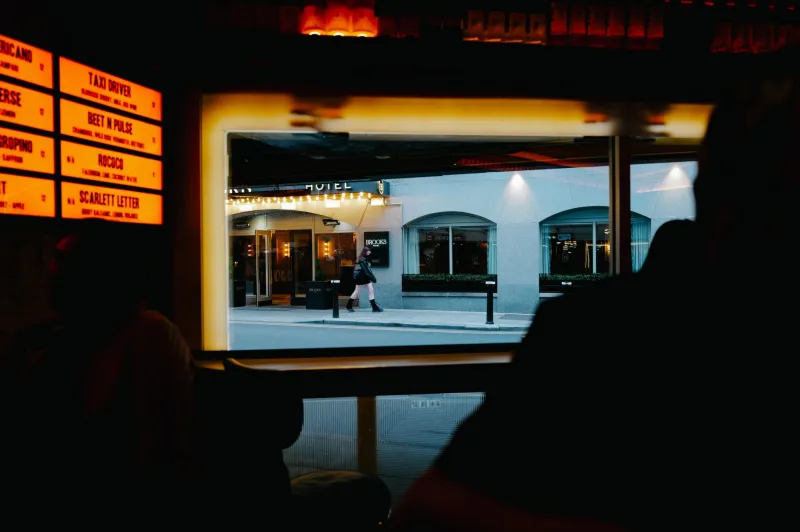
You've been there. You're at a friend's birthday dinner at some moody downtown restaurant, the Edison bulbs are doing their best, and your X-T100 is doing its worst — hunting back and forth, locking onto the wrong subject, or just giving up entirely with a blinking focus indicator. It's frustrating, especially when you know the camera is capable of genuinely beautiful images.
But here's the thing: the X-T100's autofocus struggles in low light aren't random or mysterious. They follow a pretty predictable logic once you understand what's going on under the hood. And once you understand that logic, you can work around it — or even use it to your creative advantage.
Why Contrast Detection and Darkness Don't Mix
The X-T100 relies entirely on contrast-detection autofocus (CDAF). Unlike phase-detection systems found in pricier mirrorless cameras, contrast detection works by analyzing pixel-level differences in brightness across your scene. The camera essentially asks: is this area getting sharper or blurrier as I move the lens? It keeps adjusting until contrast peaks, then locks.
That system works beautifully in good light. In low light, though, contrast differences collapse. Textures flatten. Edges blur into gradients. The camera has less information to work with, so it takes longer to find focus — or it settles on an approximate lock that isn't quite right. Add subject movement, like someone leaning in to talk at a dimly lit bar, and the whole thing can fall apart.
The X-T100 also lacks an autofocus assist beam, which some competing cameras use to project a pattern onto subjects in the dark to help the sensor find contrast. Without that crutch, you're relying entirely on ambient light.
The Specific Conditions That Hit Hardest
Not all low-light situations are created equal. Through real-world testing — wedding receptions, live music venues, candlelit restaurants, and evening outdoor events — a few specific scenarios consistently expose the X-T100's limits:
Backlit subjects at night. When your subject is standing in front of a neon sign or a bright window after dark, the camera often latches onto the bright background rather than the person. The contrast is higher back there, so that's where the AF system wants to live.
Side-lit faces in dim rooms. One half of a face in shadow, one half in soft light. The camera frequently hunts along that edge, never fully committing.
Moving subjects below about EV 3. This is roughly the light level of a dimly lit restaurant interior. At this point, tracking performance drops off noticeably. The camera can lock on a stationary subject with some patience, but following motion is a real ask.
Venues with mixed or flickering light. Concert venues with colored stage lighting, bars with TVs cycling through content — these create rapid contrast changes that confuse the system into thinking focus is shifting when it isn't.
Zone Selection: A Smarter Way to Use What You've Got
One of the most underused strategies for low-light autofocus on the X-T100 is being more deliberate about your AF zone selection. Wide-area and zone modes are convenient in bright conditions, but they give the camera too many options in the dark. Narrow the target.
Switch to a small single-point AF box and manually position it over the area of highest contrast on your subject — an eye, the edge of a lit cheekbone, a bright collar. You're essentially doing the thinking the camera can't do in the dark. It sounds like extra work, but after a few minutes it becomes intuitive, and your hit rate climbs noticeably.
The X-T100's touch screen is genuinely useful here. You can tap to reposition your focus point quickly without taking your eye off the scene, which matters when you're shooting at a live event and composition is changing constantly.
Manual Focus Without the Frustration
If you've been reluctant to use manual focus, low-light shooting is the situation that might finally convert you. The X-T100 offers two tools that make MF genuinely usable: focus peaking and digital split image.
Focus peaking highlights in-focus edges with a colored overlay — white or red are the most visible options in dim conditions. It's not pixel-perfect, but it's fast, and it lets you confirm focus at a glance. Digital split image gives you a rangefinder-style confirmation, splitting a section of the frame that realigns when focus is accurate. It requires a bit more practice but is more precise for portrait work.
For static or slow-moving subjects — a couple at a dinner table, a musician between songs — switching to MF and using peaking takes maybe three seconds once you're comfortable with it. That's often faster than waiting for the AF system to hunt and decide.
Fast Glass Changes Everything
No technique-based workaround changes the low-light equation as fundamentally as using a faster lens. The X-T100 kit zoom is an f/3.5-5.6 lens — fine in daylight, increasingly limiting as the light drops. More light reaching the sensor means more contrast for the AF system to work with, and a faster shutter speed reduces motion blur on top of that.
A few lenses worth considering for X-mount shooters dealing with low light:
- Fujinon XF 35mm f/2 WR — A compact, sharp prime that gives you two full stops over the kit zoom at similar focal lengths. It focuses quickly and handles evening events well.
- Fujinon XF 23mm f/2 WR — Similar story, wider field of view. Great for environmental portraits in tight indoor spaces.
- Fujinon XC 35mm f/2 — The budget option in this range. No weather resistance and slightly slower AF, but the aperture advantage is still real and the price is genuinely accessible.
- 7Artisans 35mm f/1.2 — A third-party manual-focus option that costs well under $100. The aperture advantage is massive, and since you're focusing manually anyway in low light, you lose nothing by going manual-only.
Even moving from f/3.5 to f/2 is a full stop and a half of light. In practice, that can be the difference between the AF system locking confidently and hunting indefinitely.
Reframing the Limitation
Here's the perspective shift that might actually help the most: slow, deliberate autofocus in low light isn't just a problem to solve — it's a prompt to shoot more intentionally.
When you can't rely on fast, accurate AF, you start pre-composing more carefully. You pick your focus point before the moment arrives. You learn to anticipate where your subject will be rather than chasing them. You slow down.
Some of the most interesting low-light photography — street scenes, restaurant portraits, concert images — has a slightly soft, impressionistic quality that comes partly from the constraints of shooting in the dark. The X-T100's film simulations, especially Classic Chrome and ETERNA, handle low-light color rendition beautifully. A slightly soft focus on a face lit by candlelight isn't a failure. It might be exactly the image you wanted.
The Bottom Line
The X-T100 isn't going to beat a Sony A7 IV in a dark bar. That's just the reality of the hardware. But with a fast prime on the front, a small single-point AF box, and some comfort with manual focus peaking, you can shoot confidently in conditions that would have you putting the camera away otherwise. The camera's limits are real — but they're not nearly as wide as they feel the first time the focus indicator blinks red in a dimly lit room.